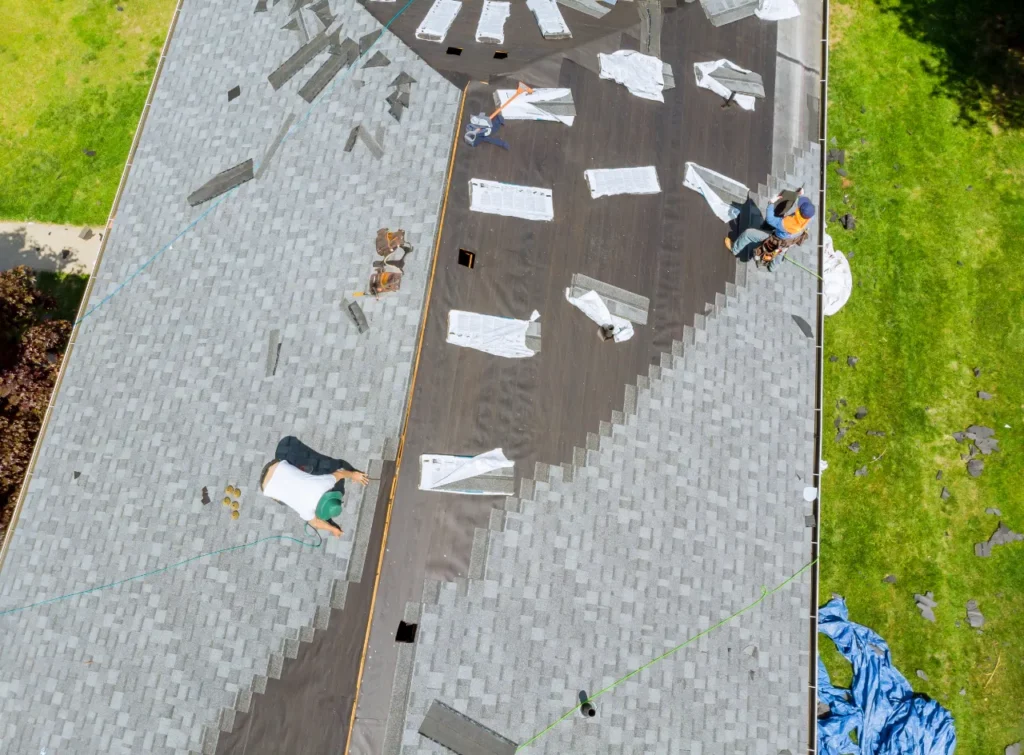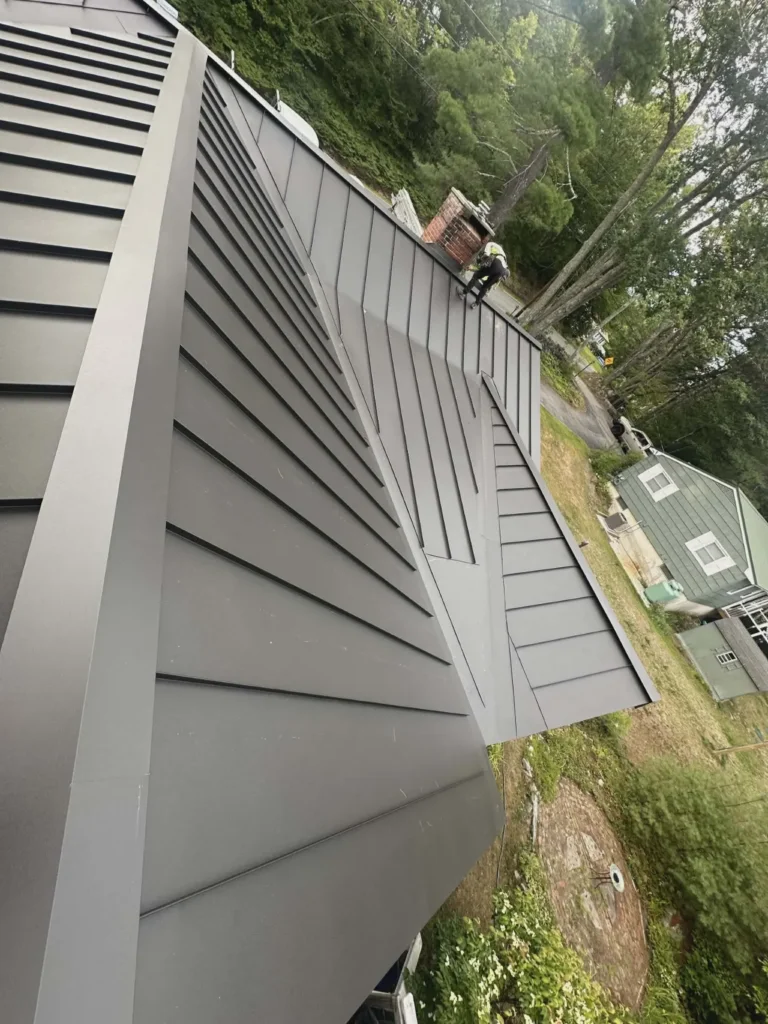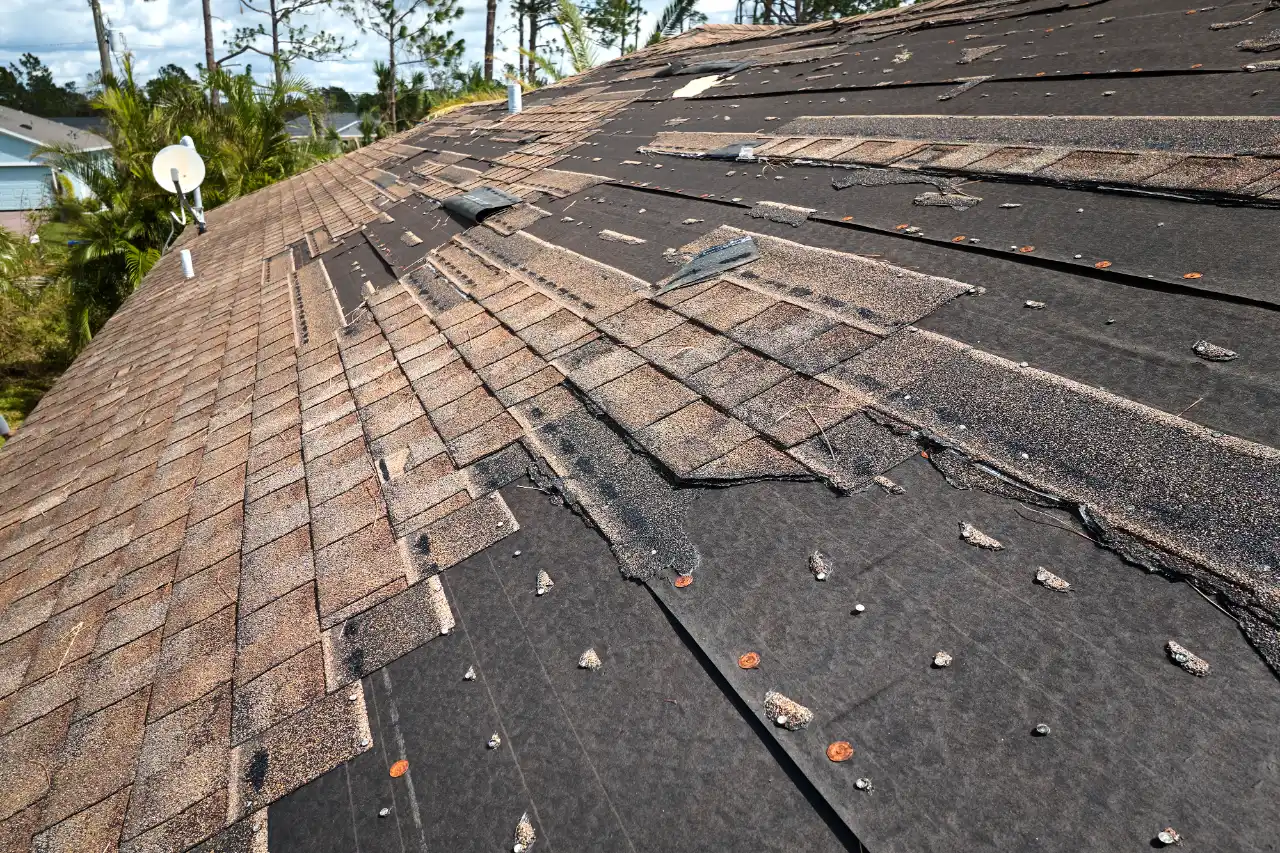
A roof leak in Massachusetts almost never shows up where the water actually got in. Wind lifts a few shingles or tears a section of flashing, rain drives sideways into the opening, and the water follows the path of least resistance along rafters and sheathing before it drops through a ceiling somewhere else entirely. That’s why chasing the stain is the wrong move. What matters in the first hours is limiting the damage inside, documenting what happened, and getting eyes on the roof before the next system rolls through. Storm damage on the South Shore and across central Massachusetts tends to come in bursts: one night of high wind, then a week of ordinary rain finishing the job through an opening nobody knew existed. Here’s the order we’d follow if it were our own house, plus what a proper leak investigation actually looks like when the crew shows up at the door.
First, Protect What’s Inside
Move anything valuable out from under the leak and put a bucket down. If water is pooling in a ceiling and making a bulge, poke a small hole at the lowest point with a screwdriver and let it drain into the bucket. It feels wrong, but a controlled hole beats a section of ceiling coming down on its own. Shut off power to any circuit in the affected area if water is anywhere near a fixture or an outlet. Photograph everything before you clean up: the stain, the drip, standing water, damaged belongings. Those photos matter later, whether for an insurance conversation or just a record of what the roof did and when. Keep drying the floor so the water doesn’t reach subfloor or get into the walls below.
Don’t Go Up There
After a storm, a roof is wet, often icy, and covered in debris that hides what’s underneath. Most serious falls happen on a slope that looked walkable from the ground. Tarping is worth doing, but only by someone who does it regularly and is insured to be on a roof. A tarp that’s laid wrong is worse than nothing: fastened in the wrong spot, it funnels water into a new opening and creates a second leak. From the ground you can look for missing shingles, granules washed into the gutters, a bent vent, or a piece of flashing hanging loose. Note where they are, take photos with a phone zoom, and leave the climbing to a crew with the right footing and equipment.
How the Leak Actually Gets Found
Finding the entry point is detective work, not guessing. We start in the attic, because the underside of the deck shows the story clearly: wet sheathing, water tracks along a rafter, daylight at a nail hole, staining that traces back uphill. From there we go up top and check the usual suspects in order, which are chimney and wall flashing, valleys, pipe boots, vent penetrations, and skylight curbs. Those details account for the large majority of roof leaks in Massachusetts homes, far more than a failed field of shingles. We photograph what we find before opening anything up, so you see the same evidence we did and understand why the repair is scoped the way it is.
Repair, Replace, or Wait
One opening on an otherwise sound roof is a repair. Flashing gets rebuilt in metal, damaged shingles come off, any soft decking is replaced, and the area is sealed back up. The judgment call comes when a roof has multiple failures at once, or when the shingles are near the end of their service life anyway. Patching a worn out roof buys a season and then you’re back where you started. We’ll tell you plainly which situation you’re in, with photos to back it up, and we’ll price the repair and the replacement so you can compare. If a repair genuinely solves it, we say so and do the repair.